
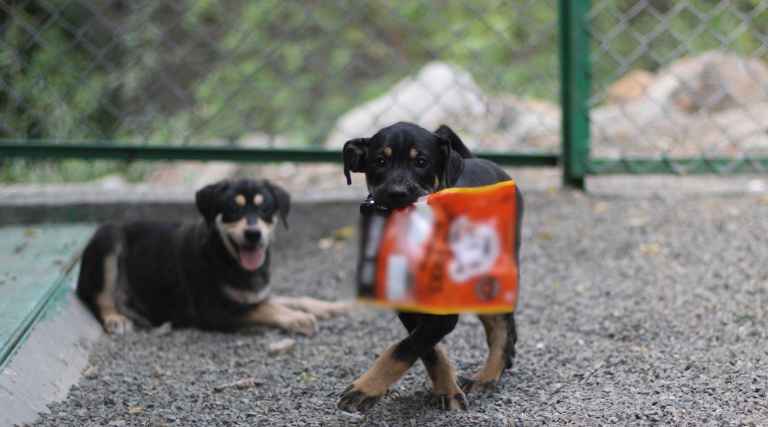
When puppies start teething, although a very natural phase of development, can be a very daunting experience for new pet parents unsure of what to expect or do next. In this blog, you will learn tell-tale signs of dog teething, different stages of teeth development and a guide on how to set the right foundation for healthy dental treatment and routines for your puppy.
What Is Puppy Teething?
Just like children, puppies also go through a teething phase which is absolutely normal. When baby (deciduous) teeth fall and new teeth start to grow, puppies go through the very same phase with similar gum irritation and discomfort. At this stage, unlike babies who would cry during teething, puppies show their irritation by biting anything they can get their paws on.
Puppy Teething Timeline: What to Expect
Puppies start teething anywhere from 2 – 6 weeks. The table below shows you what to expect if you have new born puppies at home or expecting a new litter.
| Age | What Happens |
| 0 – 2 weeks | No teeth |
| 2 – 4 weeks | Baby (deciduous) teeth start to appear. |
| Around 8 weeks | A full set of 28 baby teeth develop. |
| 3 – 6 months | Baby teeth begin to fall out and adult teeth start to emerge; peak teething phase. |
| 6 – 8 months | Most puppies have all 42 adult teeth |
Signs and Symptoms of Puppy Teething
There are evident signs of irritation, when your puppy begins to teethe. At this time, your puppy may not be in pain with new teeth coming out of their gums, but they are uncomfortable and their gums could be sore making them a bit irritable and moody. Here’s what you should expect and look out for in puppies around 2 weeks old.
● Red or inflamed gums
● Drooling and bad breath
● Excessive chewing and gnawing behaviour
● Bleeding gums
● Missing teeth
● Lower appetite
● Fussiness or a worse mood than usual
Is Puppy Teething Painful?
Not exactly. Puppies experience some discomfort during teething, but it’s not very painful. Frozen treats or cold chew toys or even rubber chew toys can be given to soothe the gums and reduce the discomfort your pups experience.
Why Do Puppies Chew Everything During Teething?
Chewing strengthens their jaw muscles before new adult teeth can form, that’s why you would see your young pup chewing on furniture, your hand or their toys. It is absolutely natural for puppies to do this when they are teething. This activity soothes their gums and relieves pressure and soreness too.
Correct and train your puppies earlier on, not to bite or chew on furniture or your hands or feet. Although at first it may seem cute, it sets a bad habit for them in the long run.
Safe Chewing Solutions for Teething Puppies
It’s important to give your pet the best without it hurting their gums or stunting their teeth by being too hard. Although they may love chewing at your furniture and your clothes, it’s not something you would like or encourage. There are many chewies in the market that would be beneficial for your puppies so let’s find out what’s safe, healthy and works best for their sensitive gums and developing teeth.
Chew Sticks for Puppies: Benefits and Safety
Puppy-safe chew sticks give the most comfort during the teething phase. They soothe your puppy’s gums and satisfy their urge to chew. They also support dental hygiene by cleaning their teeth and keeping them clean.
Puppy Teething Sticks: What to Look For
When choosing a teething stick for your pet, it may be tempting to go for taste without checking the ingredients. But, you should also consider the size and softness so that it doesn’t hurt your pup’s gums or chip their teeth. Make sure the ingredients are made from safe, non-toxic products that are free from harmful additives, artificial and strong flavors or sharp edges.
Best Types of Chews for Puppies
There are many chew toys available in the market from rubber to edible leather chewies to ones that can be frozen and textured that can safely massage the gums.
If you have recently introduced your pup to chew toys, keep a close eye on how they react and how aggressive they get with it. Sometimes, pups can be allergic to rubber or an ingredient in the chewies or even parts of the chew toy can fall off becoming choking hazards for your pet. Ensure that there are no splinters or hard material that can chip their teeth or hurt their gums.
Homemade Ways to Soothe Puppy Teething Discomfort
Many pet parents are wary when choosing store-bought pet products, at times like these, it’s best to opt for homemade chew toys from cool carrots and cucumbers in the fridge to clean homemade damp teeshirts wound as ropes.
Wind them into small thick ropes and chill them in the fridge before your pup can chew on them for short periods. As an alternative, you could also buy pet-safe rubber toys that can be chilled and used for your puppies to play with or chew.
Foods and Items to Avoid During Teething
There are many human foods that may be nutritious for people but could be toxic or harmful for dogs. But more importantly avoid foods like bones that could cause injuries and may be a choking hazard to dogs. Bones can also chip the teeth causing more pain and distress.
How to Stop a Puppy from Biting During Teething
Puppies need to be corrected as soon as they start biting your hands, your clothing or shoes. If their actions are not corrected, it could be problematic as they grow older. Discourage them from biting you with rubber or rope toys. This would keep them engaged and soothe their gums too. Avoid rough play or games that involve biting your arms. Reward your pup whenever they follow your commands of not biting or engage in gentle play with their favorite chewies or toys.
Puppy Teething and Dental Care
Along with training your puppy about gentle playing and not biting, you should also introduce a daily routine of brushing their teeth every morning. Always use pet-safe toothpaste and a silicon finger brush or soft-bristle toothbrush. Human toothpaste is extremely toxic and should never be used for your pets. Start with short intervals and then move to longer sessions of 1 to 2 minutes of brushing their teeth and massaging their gums.
When to Visit a Veterinarian During Puppy Teething
Teething is very normal in all animals and your pet may be in some discomfort but not in any pain. However, if you notice these signs, you may want to bring them to a vet:
● Constant crying or whimpering
● Heavy bleeding from the gums
● Lack of appetite or refusing to eat
● Broken or chipped teeth
● Swelling or foul breath
Retained Baby Teeth in Puppies
In small breed dogs, sometimes, their baby teeth don’t fall and cause issues like misalignment, double teeth, gum problems. It is advisable to visit your vet to remove retained baby teeth to avoid dental problems and keep your puppy’s oral cavity healthy.
Puppy Teething FAQs
● At what age do puppies start teething?
Baby teeth start to appear between the second week and fourth week. But, puppies start to lose baby teeth and get adult teeth by the third or fourth month.
● When do puppies stop teething?
Puppies finish teething by 6 months give or take a few months depending on the breed and size.
● Are chew sticks safe for puppies?
When choosing chew sticks for your puppies, ensure you read the labels to make sure the ingredients are made from safe, non-toxic products that are free from harmful additives, artificial and strong flavors or sharp edges.
● How long should a puppy chew on a teething stick?
Don’t let your puppy chew on a pet-safe teething stick for too long (more than 30 minutes) to avoid damaging their teeth. Always supervise and ensure you take the teething stick away when it becomes small or has rough edges to avoid choking hazards or bruising the gums.
● Can teething make puppies aggressive?
Teething causes discomfort and irritation, which makes puppies want to bite anything in sight from toys and chew sticks to your clothes and hands. With training and constant reinforcement, you can stop your puppy from biting.
Conclusion
If you have new born puppies, you can expect teething to occur within 2 – 4 weeks. It can be a playful time yet, bringing some discomfort to your pups. Simple home remedies like refrigerated carrots, cucumbers and cold damp rolled t-shirts can act as soothing chew toys and ropes for your teething puppies. Keep a look out for loose teeth or retained teeth and seek vet advice in case there is excessive bleeding, swelling or foul breath.